Medentee: the healthcare platform that had to change its mind
How a clinic tool that wasn’t selling became an award-winning communication platform for medical communities.
Where it started
Medentee is a British startup that set out to fix how medical professionals communicate. When I joined in late 2021, the product was built around clinics: tools for doctors to talk to patients and to each other, with three account types and a flagship feature called Cases. A case worked like a shared file for one patient’s story. Doctors could gather opinions from colleagues, run group consultations, and keep every document in one place.
I came in as design lead for the web platform. The company ran two product teams, web and mobile, and I had three junior designers on mine. My first months went into the plumbing. We agreed on a simple rule: nothing gets polished until the idea has been tested. Rough is cheap to throw away. I brought analysts and developers into the design reviews, so engineers saw concepts early instead of finished screens. And we started building our own design system for the web platform, one that could survive constant change. None of this was visible to a user. Everything we shipped later stood on it.
The honest part: it wasn’t selling
The product was well made. Selling it was another story, and three things kept getting in the way.
- UK clinics are careful institutions. They run on old, proven software, and switching costs them real money and risk. won’t switch
- Doctors themselves are a conservative audience, for good reasons. can’t blame them
- Selling to clinics one by one didn’t scale, while every deal dragged privacy and compliance requirements behind it. doesn’t scale
We could have kept polishing the same screens and hoping. Instead we went looking for who needs a communication platform for medicine right now and doesn’t have one.
The pivot
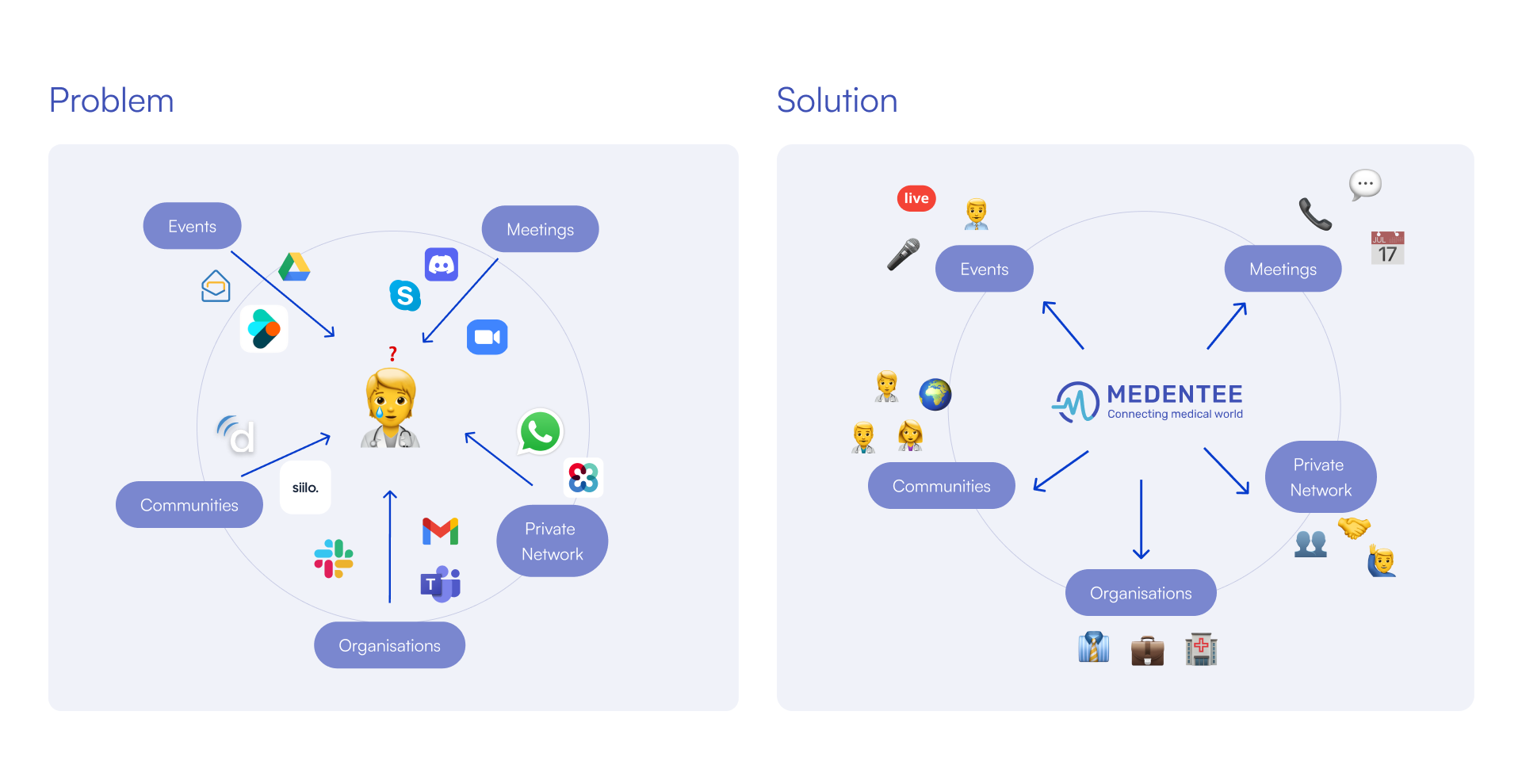
We watched how doctors behave outside the clinic. They go to conferences, join communities, network constantly, and they do it in WhatsApp chats and one-off event apps that die a week after the closing keynote.
So we repositioned Medentee around non-clinical communication and built two new pillars.
Communities
Somewhere to share content, discuss it, and find colleagues, so the people you meet at a conference don’t disappear when it ends.
Events
Virtual support for medical conferences: live streams, channels, agendas, and networking that keeps working after the event ends.
We stopped competing with clinical systems, and we stopped having to answer for security and patient data.
A few things we built
The conference ends, the network stays
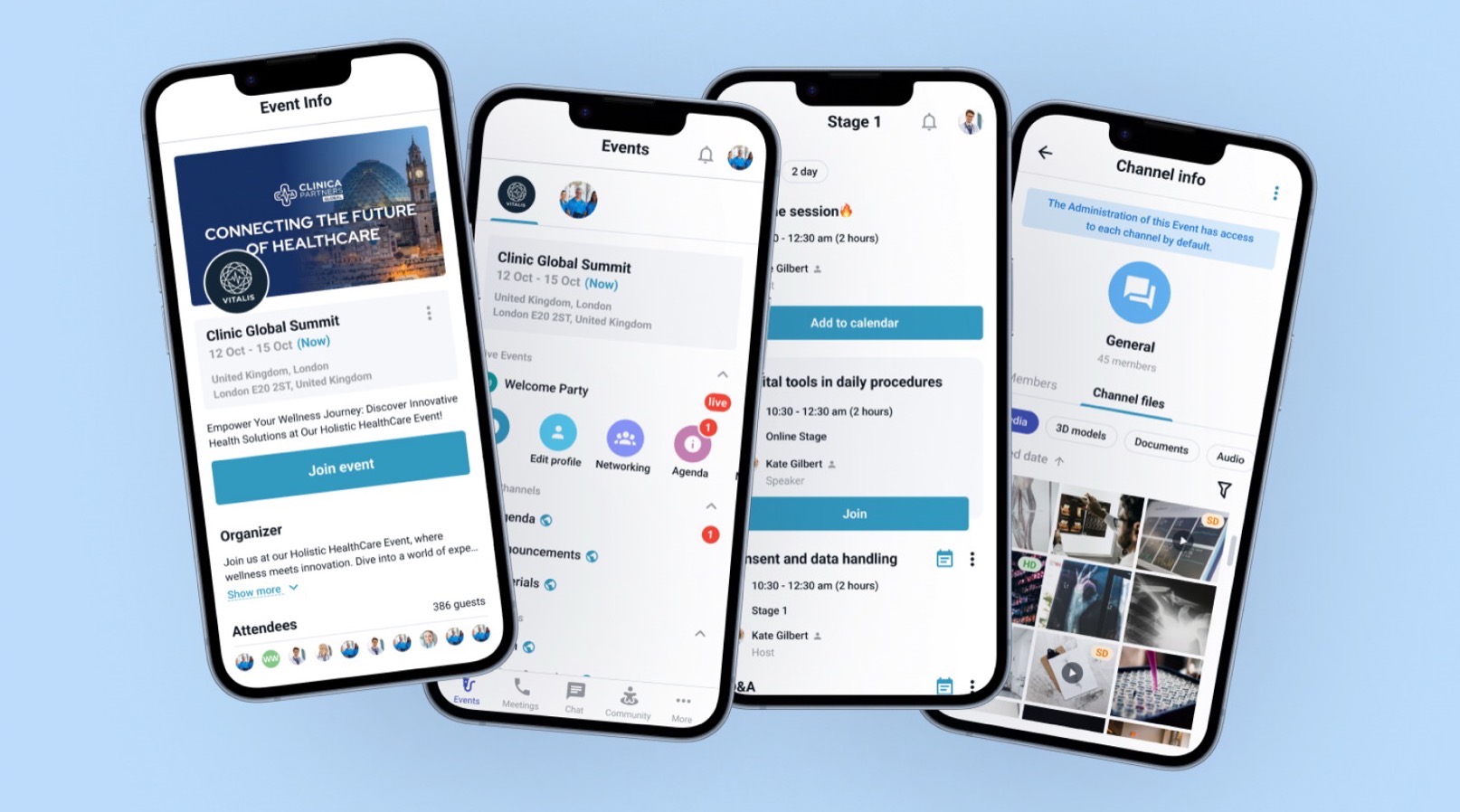
Conference organizers used to build one-off apps for every event. Attendees downloaded them, used them for two days, and lost every contact they’d made. We built events into the platform instead. One registration works for every future event. Organizers get four channels to reach guests: text channels, news feeds, live streams, and direct messages. After the event, connections stay in your contacts, and an organizer can turn an event audience into a standing community. Setting up an event takes about ten minutes.
After launch, five major events in Ukraine, Mexico, Britain and Israel made the platform their official communication tool.
Cases hold the whole consultation
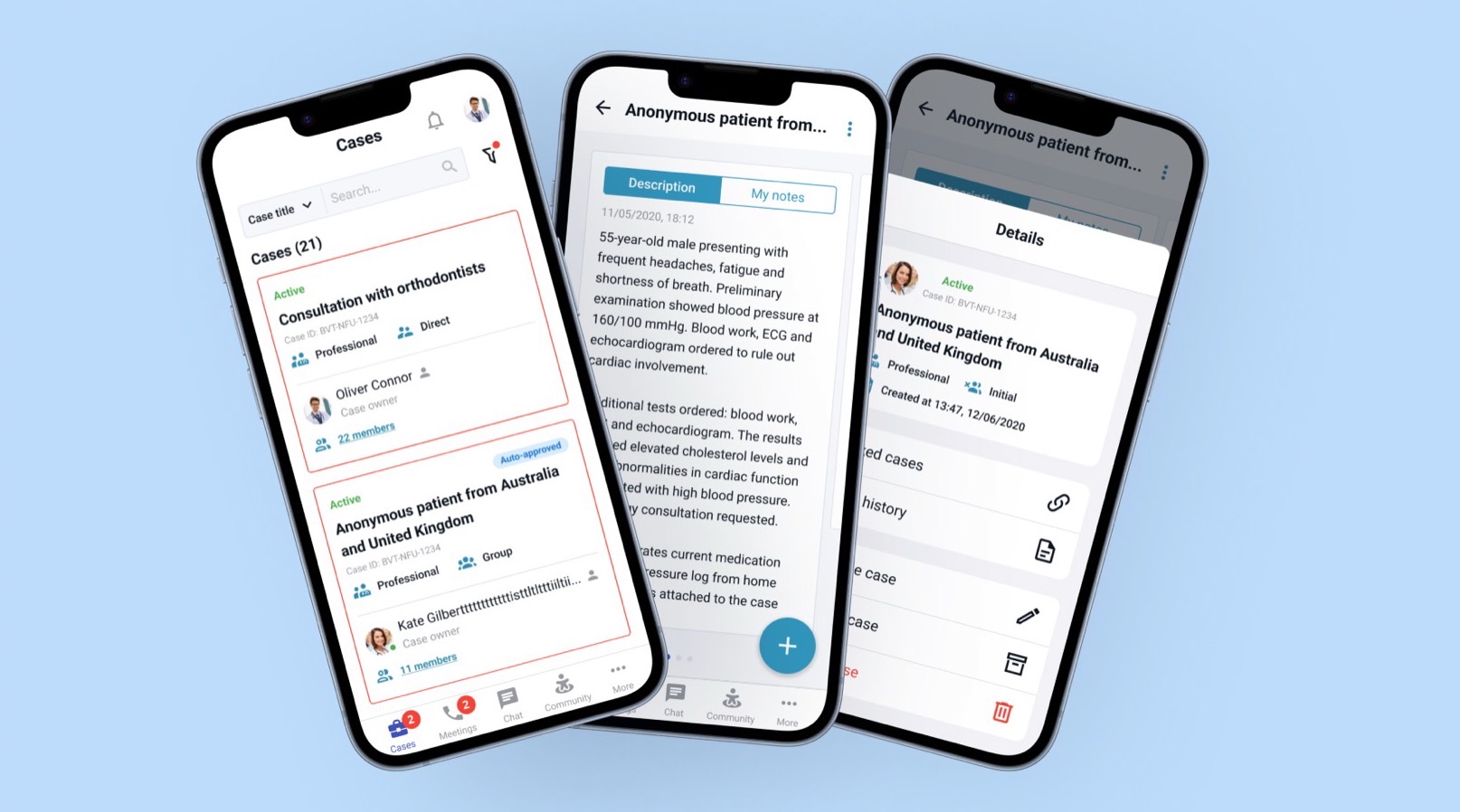
Medical opinions get lost in messengers. We designed cases as structured objects instead: a description, a thread of colleague opinions, private notes, files with automatic permissions based on who participates, and the option to keep the patient anonymous. A council of doctors becomes a readable document, and privacy is built into the structure rather than promised in a policy.
One selector for everything
Half the platform’s features need you to pick people: for a broadcast, a channel, a case. The original modal only allowed picking users one by one. We rebuilt it to select whole groups, departments, or everyone at once. A small component, used everywhere, and a dozen workflows got faster.
Navigation that adapts to why you came
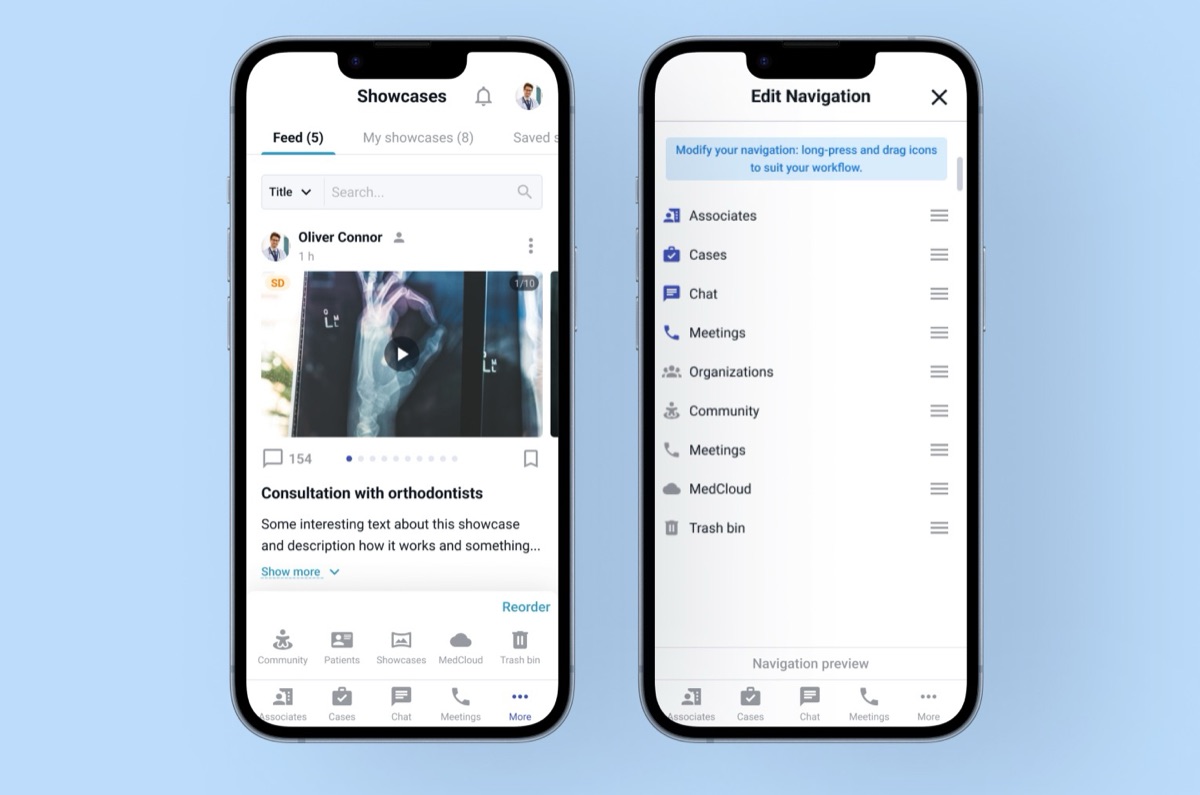
Someone who joins for a conference needs different things than someone added by their hospital. The app notices how you arrived and puts the relevant section into your main navigation on first login. You can also rearrange the menu yourself, the same way you’d organize your desk.
One calendar for every kind of meeting
Personal calls, group consultations, patient appointments and event sessions all live in one place, color-coded, with RSVP states you can see at a glance, and export to Google Calendar. On desktop you see the list and the details side by side.
Designing in the field
Somewhere along the way my job stopped fitting inside “design lead”. The founder needed someone to own the product while he focused on partnerships, and he picked me.
Design was now one part of the job. I ran the whole product team day to day: designers, analysts, developers, QA. One of my first calls was to merge our two design teams into one, so the web and mobile apps would stop drifting apart. I owned the mid-term roadmap and release planning. And when the platform started growing faster than we could walk every new user through it, we shipped a catalog of user guides, alongside the product’s marketing site that my team built and I led.
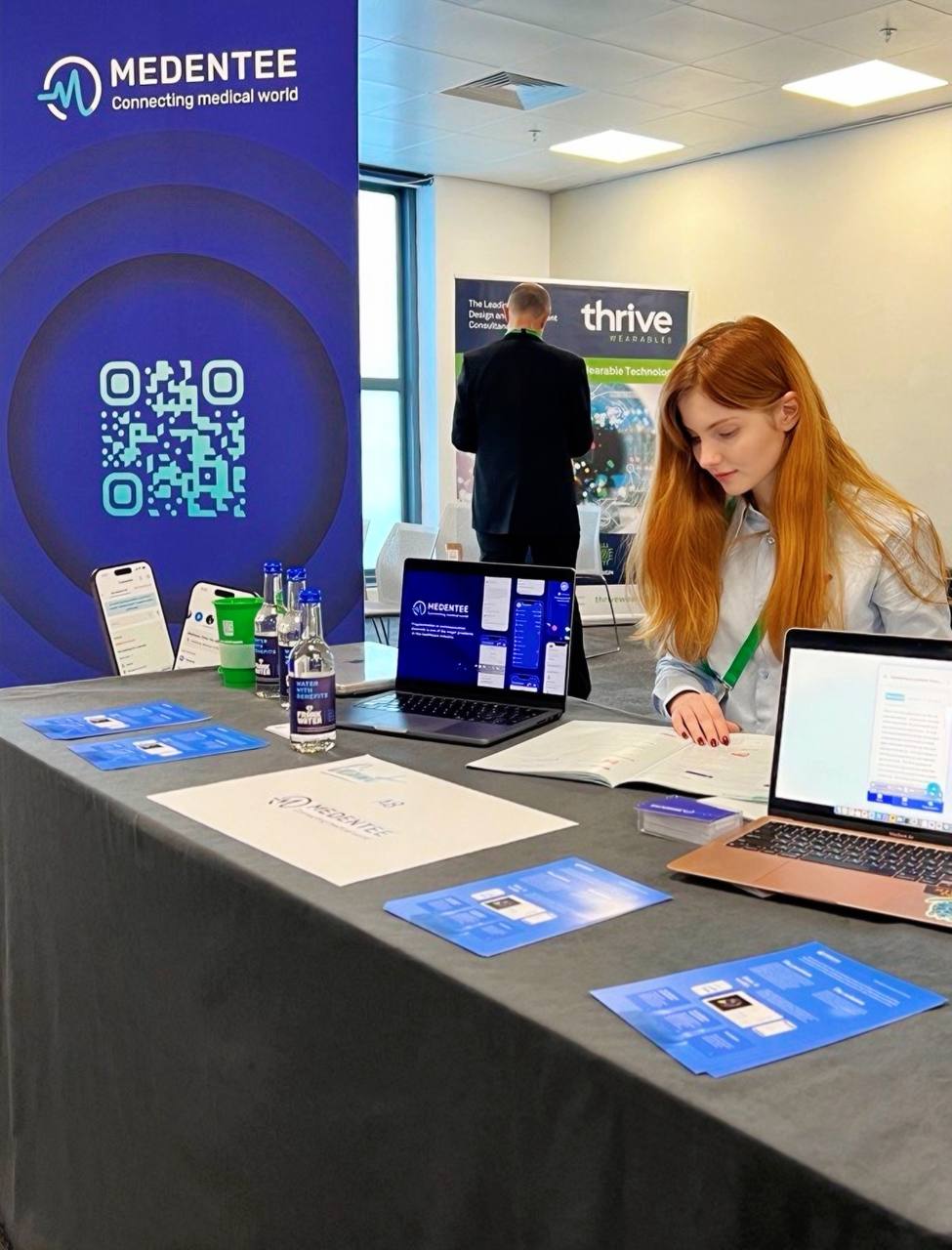
I went to our events in person. I onboarded attendees at the registration desk, watched them get stuck, and fixed flows the same week.
At the registration desk you don’t get to explain anything. You just watch.
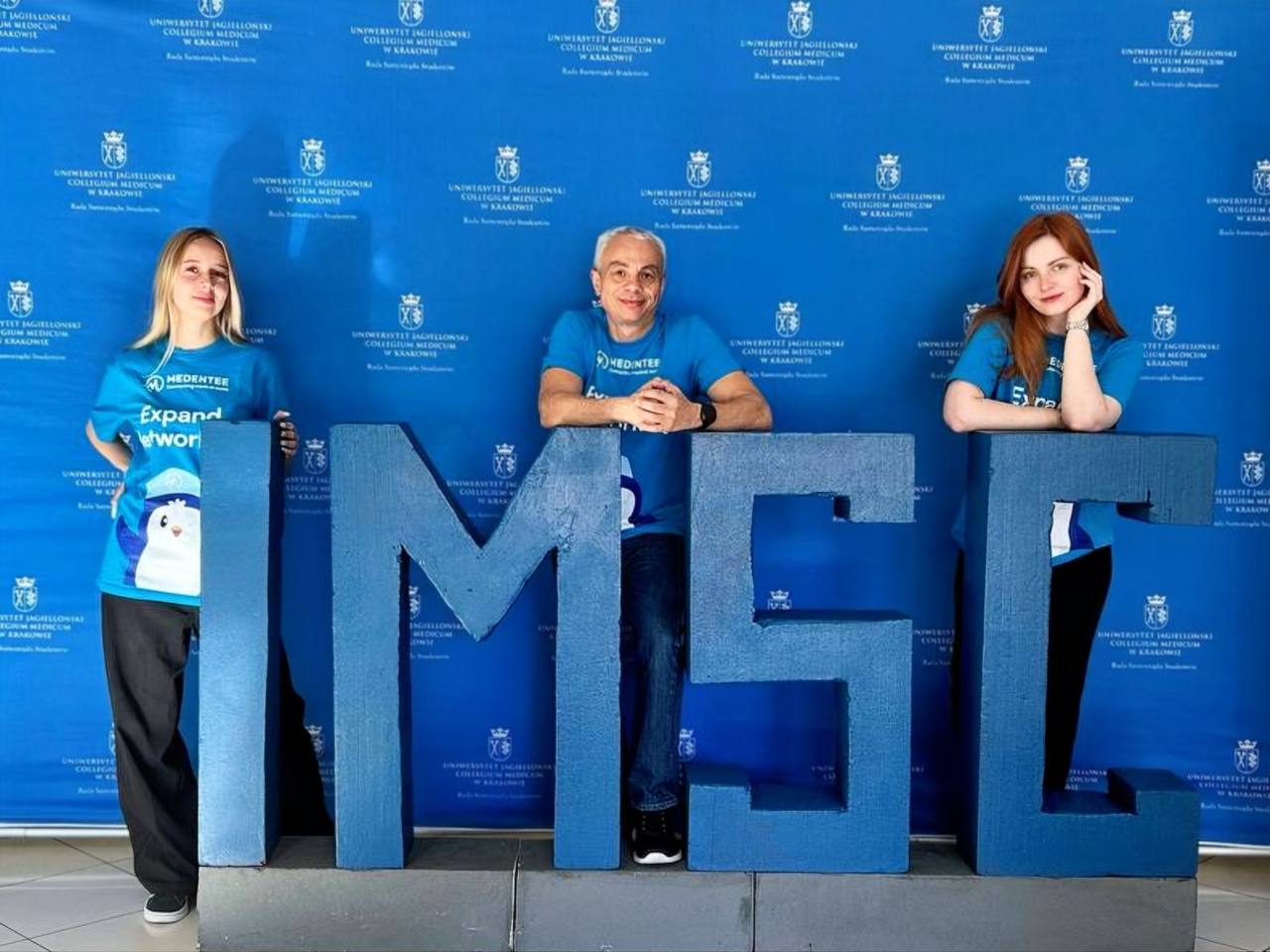
I also built pitch decks with the founder, hosted interviews with clients for the company’s podcast, and gave a lecture on community building at the International Medical Students' Conference in Kraków, together with our marketing lead.
Malta
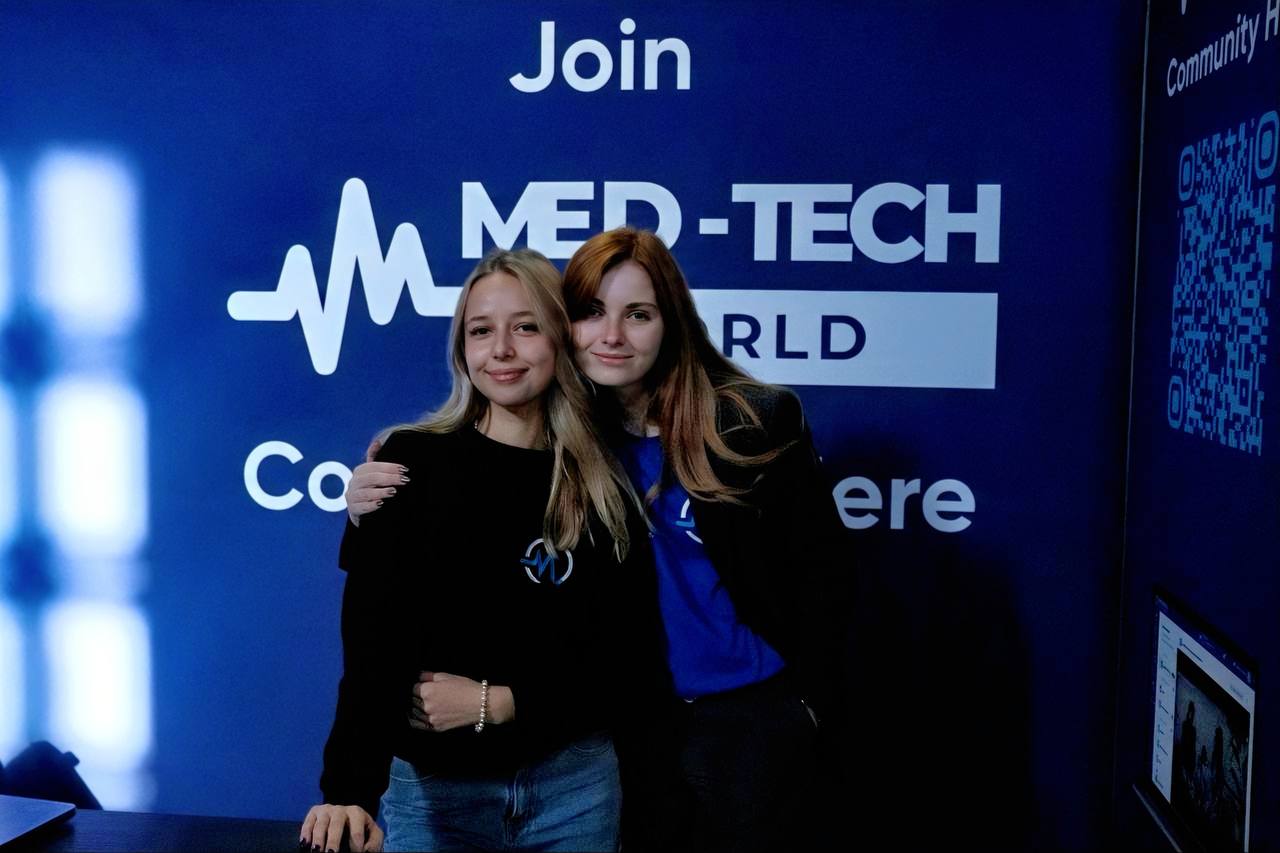
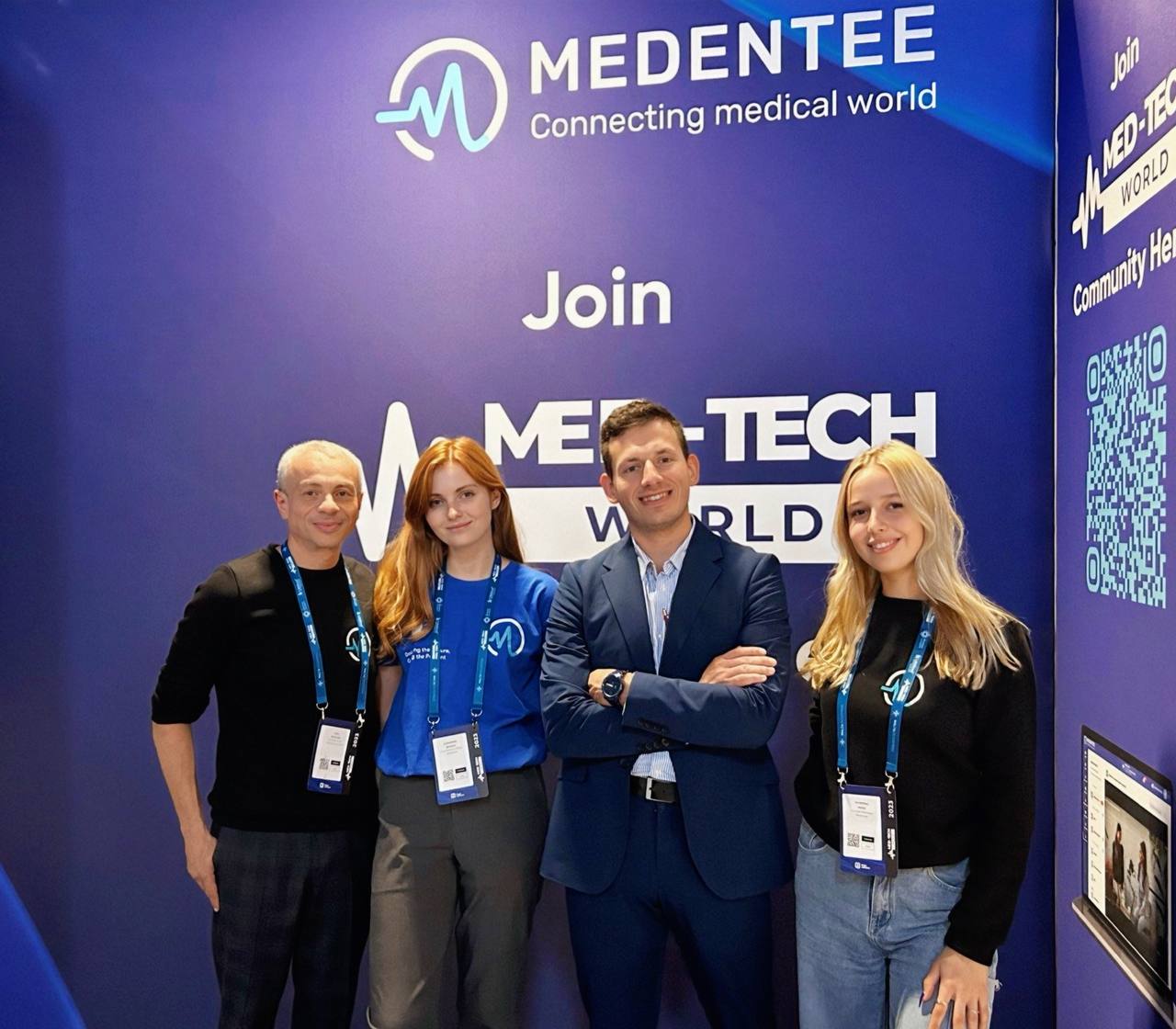
In October 2023 the Med-Tech World Summit in Valletta ran its communication on Medentee. That summit gathered over 1,500 attendees from more than 50 countries. On the same stage, at the Malta Med-Tech Awards gala, Medentee won Digital Health Solution of the Year 2023.
I spent that day at the registration desk onboarding users, and the evening on stage with the team.
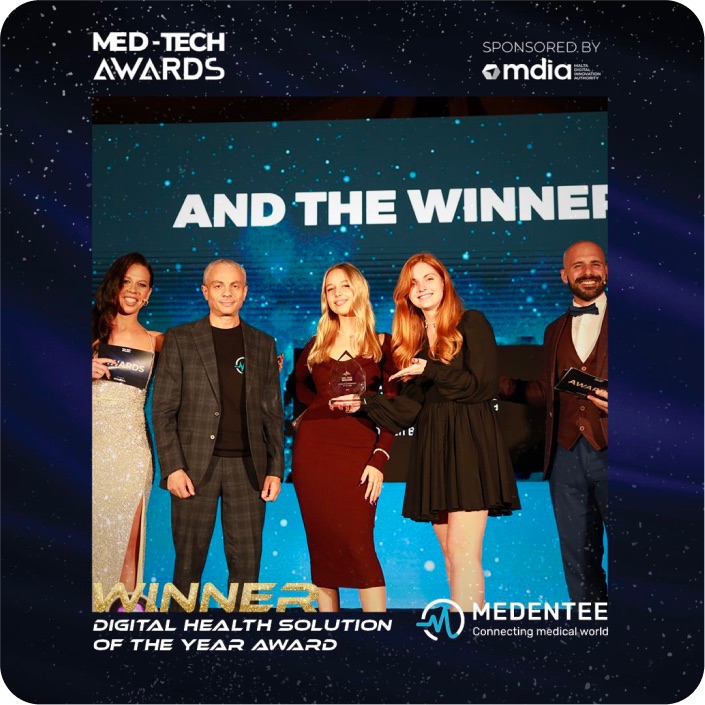
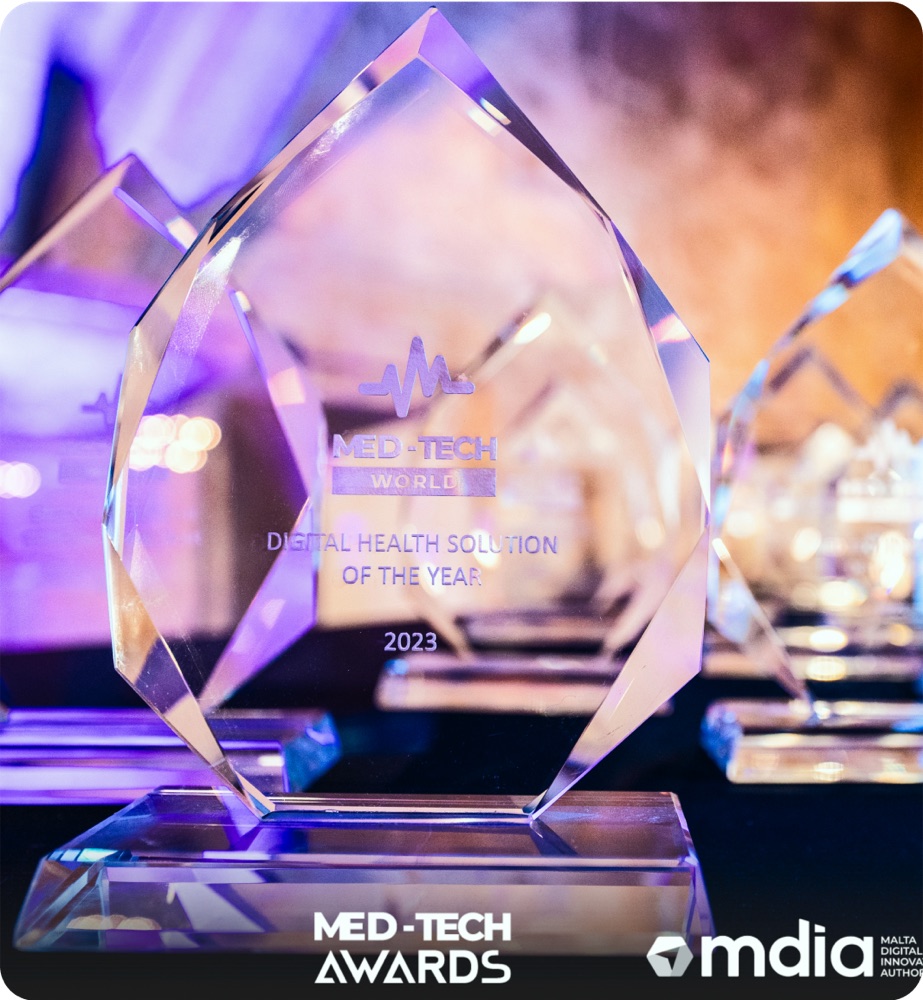
Source: Medentee interview at the Med-Tech World Awards, Malta 2023
What came out of it
The platform grew from a struggling clinic tool into a community product.
Med-Tech World Awards, Malta.
The summit ran its community on our platform.
All three designers I mentored grew into independent careers: design, product, and growth.
And I left the company as Head of Product, which is a strange and useful thing to happen to a designer. It taught me to treat every design decision as a business decision, and I never unlearned it.
None of it happened alone, though. I had a team I could trust with half a word, and two of them tell it better than I ever could:
We worked side by side for over two years: first when Alexandra joined as design lead and I was the lead analyst, then when she became Head of Product and I worked with her as a product manager.
She took the visions the product owner passed to us and masterfully turned them into options for real functionality, going beyond what was proposed and anticipating how features would need to grow. Together we worked out how to seat new features onto a living platform without breaking what existed. Over time we reached the kind of understanding where half a word was enough.
And she is fearless. Whatever task she takes on, she meets it openly, ready to listen, to interact, and to put in the extra effort for the best result.
I worked with Alexandra at Medentee for about two years. I ran engineering, she came in as design lead and later took over the whole product as Head of Product. When the founder had to step back from day-to-day product work, she was the person he handed it to.
From the engineering seat, the thing I valued most was that her designs survived contact with real data. Empty states, pending members, a patient who has to stay anonymous, etc. She had already thought about those before we asked. When she became Head of Product, suddenly a dozen features across the platform got simpler.
She was also the easiest product person I’ve worked with when a design was too expensive to build. Design and engineering disagreements always ended in a decision.
If you have a product that has grown complicated and needs someone to make it make sense, hire her. Every time I get to work with her again, I say yes.